
The Spanish Rhythm - Basic Form
The basic technique is an introduction for the fundamental movement, once you get the hang of it, you will move to more advanced rhythms. We will basically be filling in between the strokes of the basic rhythm to create a richer and fuller sound.
The technique for basic rhythm is illustrated in the figure below and the accompanying video:
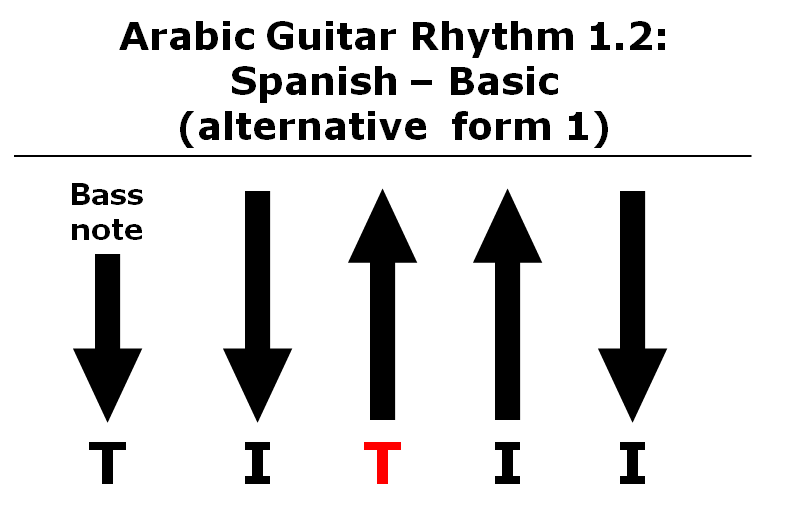
2. Downward stroke of all of the chord’s strings with the index finger (I)
3. Upward stroke with the index finger (I)
4. Another upward stroke with the index finger (I)
5. Final downward stroke with the index finger (I)
A variation of the basic technique is to use the thumb for the third stroke (the first upward one). This technique might be better to use as it is easier to add a palm mute step (covered later) and/or a Rasgueado (four sequential strokes instead of the index finger’s single stroke, also covered in later lessons). The steps for this alternative form are:
2. Downward stroke of all of the chord’s strings with the index finger (I)
3. Upward stroke with the thumb (T)
4. Upward stroke with the index finger (I)
5. Final downward stroke with the index finger (I)
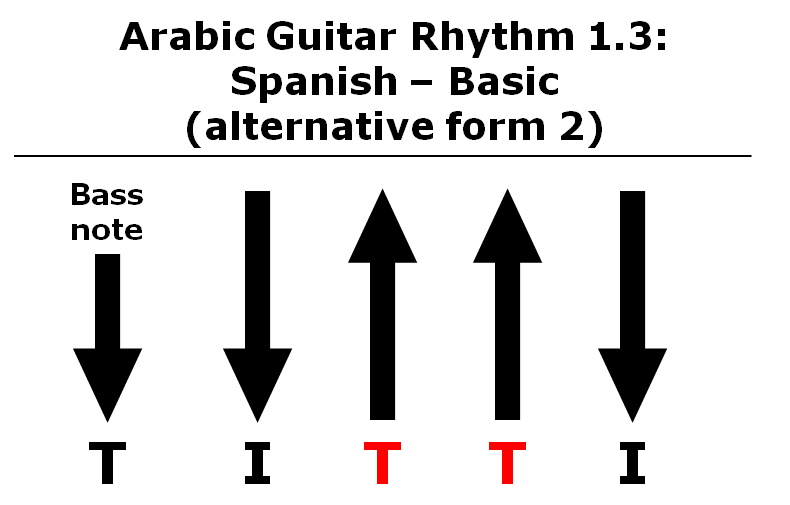
2. Downward strokes of all of the chord’s strings with the index finger (I)
3. Two upward strokes with the thumb (T)
4. Final downward stroke with the index finger (I)